May 27–31, 2026
Ravnjak, Montenegro
About Phowa Practice
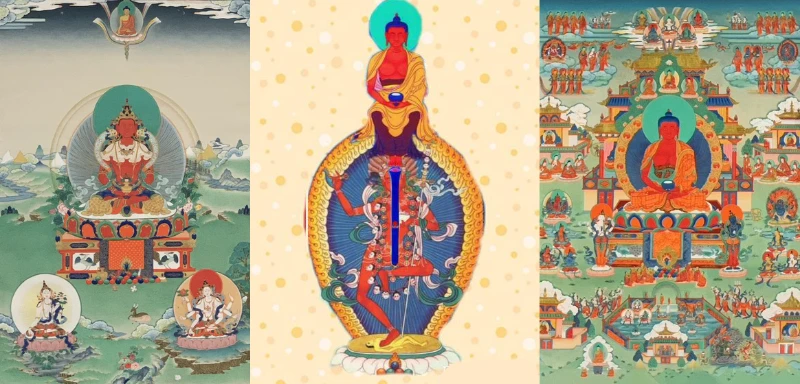
Image: gardrolma.org
Phowa is one of the most direct Vajrayana practices for achieving a conscious transition at the moment of death. Known as “the practice of conscious transfer,” it offers a swift path to liberation from samsara. This sacred method brings together the essence of earlier Dharma teachings, all meant to free beings from suffering.
With skillful practice, at the final moment of this life, consciousness is directed through the Brahma aperture to Dewachen, the Pure Land of Buddha Amitabha. In Dewachen, practitioners find perfect conditions for Dharma training and rapid advancement toward full awakening.
Marpa Lotsawa (1012–1097) taught:
“If one studies and practices Phowa repeatedly, then at death one will not fall into despair. Familiarity with this path brings cheerful confidence at life’s end.”
Because Phowa is a Vajrayana practice, receiving Buddist Refuge and Amitabha empowerment (which both will be given) and guidance from a qualified teacher are essential.
What do we need to know about the Phowa practice
The particular practice lineage is Namchö Phowa.
The participating in the course doesn’t imply any samaya, or commitment, occurrence.
However, there is a qualification requirement by Rinpoche for participating in the course: for a few months, as long as possible, before the course perform the Amitabha practice in any version – daily. Download the text here:
Amitabha Meditation in English
Amitabha Meditation in Russian
Amitabha image
About Dupseng Rinpoche
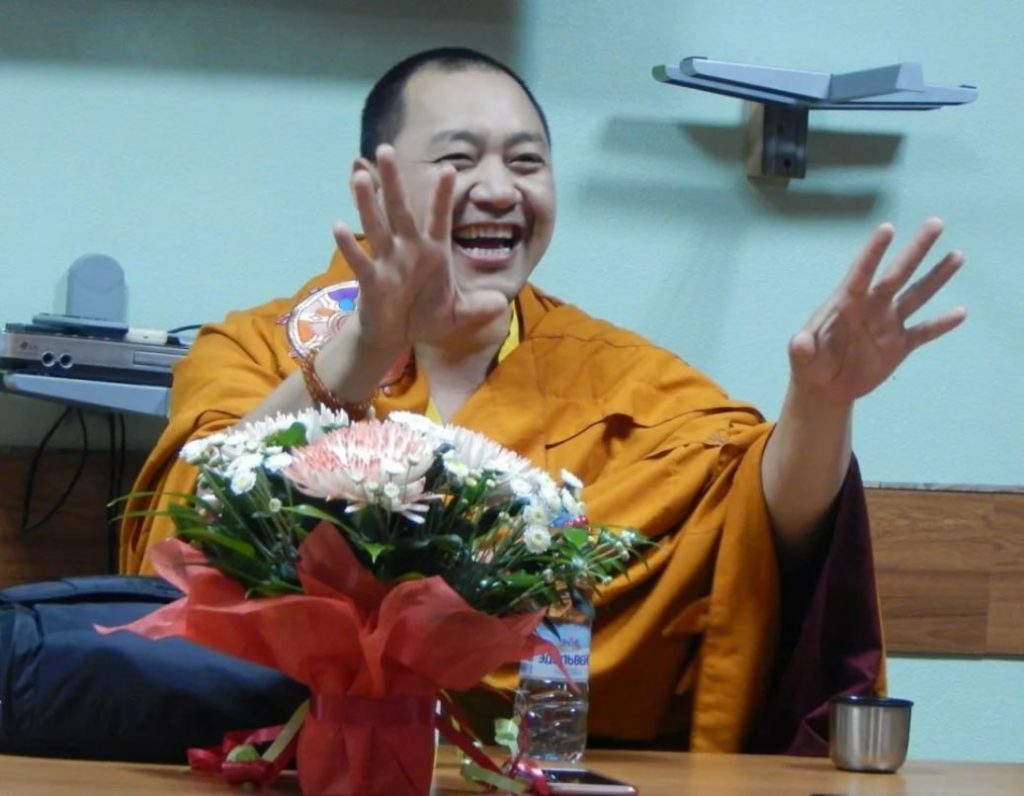
The 3rd Dupseng Rinpoche was born in 1981 in Mundgod, Karnataka, in India.
From a very young age, the boy started telling his parents and family that he had many students and two monasteries, one in Tibet and the other in Nepal. There was a small Kagyu monastery in his village, and the boy always wanted to go there and stay. He entered monastery life when he was nearly four years old and studied there, while exhibiting great talent and learning all the ritual arts very quickly.
Later, His Holiness Shamar Rinpoche recognized that this boy was the reincarnation of the previous Dupseng Rinpoche.
Led by Shangpa Rinpoche, the senior lamas of Jangchub Choeling Monastery (the seat of the 2nd Dupseng Rinpoche) in Pokhara, Nepal, went to South India to welcome Rinpoche. On the journey back to Nepal, Dupseng Rinpoche, together with Sabchu Rinpoche, had their official enthronement ceremony at the Rumtek Monastery.
Rinpoche studied with many great masters in Nepal, India, and France. He also studied at Delhi University, and in 2007 he completed English Language and Literature studies at Cambridge University in the United Kingdom, graduating with a Master’s degree in Theology.
Rinpoche received many teachings, oral transmissions, and empowerments. From 2008 to 2011, Rinpoche entered the traditional Karma Kagyu three-year-and-three-month retreat under the guidance of Venerable Lama Sherap Gyaltsen Rinpoche in the Karma Ngedon Palbar Ling Retreat Center at Sarangkot Mountain, in Pokhara.
Rinpoche is first and foremost a vajra master guiding his students, both monastic and lay, in their practice of the Buddhadharma through all levels. For his monastic students’ intensive development, he is the retreat master responsible for the Karma Kagyu traditional three-year-three-month retreat at Karma Ngedon Palbar Ling Retreat Center, Sarangkot, Nepal. Besides his activities as retreat master, Rinpoche also takes care of Jangchub Choeling Monastery, Vikrama Shilla Buddhist Institute, Dupgyud Choling Monastery, as well as Kagyu Institute for Buddhist Studies and Tharpa Choling Nunnery in Muktinath.
For his lay students, Rinpoche has been traveling and teaching for years, holding group retreats and guiding smaller and larger groups in shorter and longer retreats. In 2018, a long-held aspiration finally bore fruit, and a retreat program for lay yogis based on the curriculum of the traditional three-year-three-month retreat was launched. It is Rinpoche’s aspiration to guide his lay students to the same accomplishments as the traditional lamas, in a program tailored to the conditions of modern life. The program is available through regular events Rinpoche holds in Thailand, Nepal, Denmark, and soon Czechia.
General Course Information
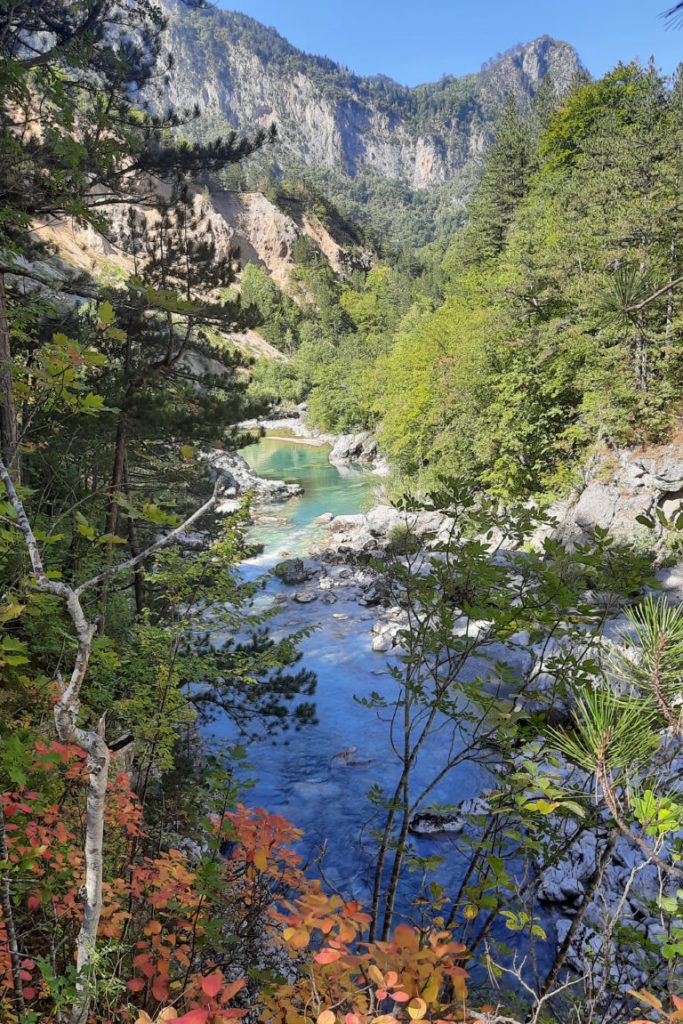
The course will take place on the grounds of Hotel Ravnjak (pronounced “Ravnyak”), in the picturesque north of Montenegro.
Full course participation is required.
For those who do not have Buddhist Refuge, it will be granted.
The course is held in English, with radio translations into Russian and Montenegrin/Serbian.
Course Schedule
The course starts on Wednesday, May 27, after lunch. We will have the Amitabha empowerment and introductory lecture that afternoon. Participation is mandatory.
The next three days will be dedicated to practicing Phowa, and in the mornings we will do yoga together with Rinpoche.
On the last day, Sunday, May 31, we will hold a dedication session and ceremonies, and also celebrate Saga Dawa—the start of the sacred month commemorating the birth, enlightenment, and parinirvana of Buddha Shakyamuni. These will last until lunch.
Accommodation
We have a limited number of rooms in Hotel Ravnjak. We are also trying to secure as many rooms as possible in neighboring hotels, which we will also be able to offer (hereinafter “our hotels”). Please note that most rooms in these hotels are mixed, dormitory-style. From those hotels, we will organize a free shuttle to the venue and back every morning and evening.
The beds in “our hotels” are only for course participants; we cannot host your friends or family members who are not taking part in the course.
You can also search for your own accommodation on booking.com or similar sites. In that case, however, you would need to rent a car to get around.
It is also possible to stay on site in tents. We are looking into options to arrange tent and equipment rental.
There are also a few spots for mobile homes on site.
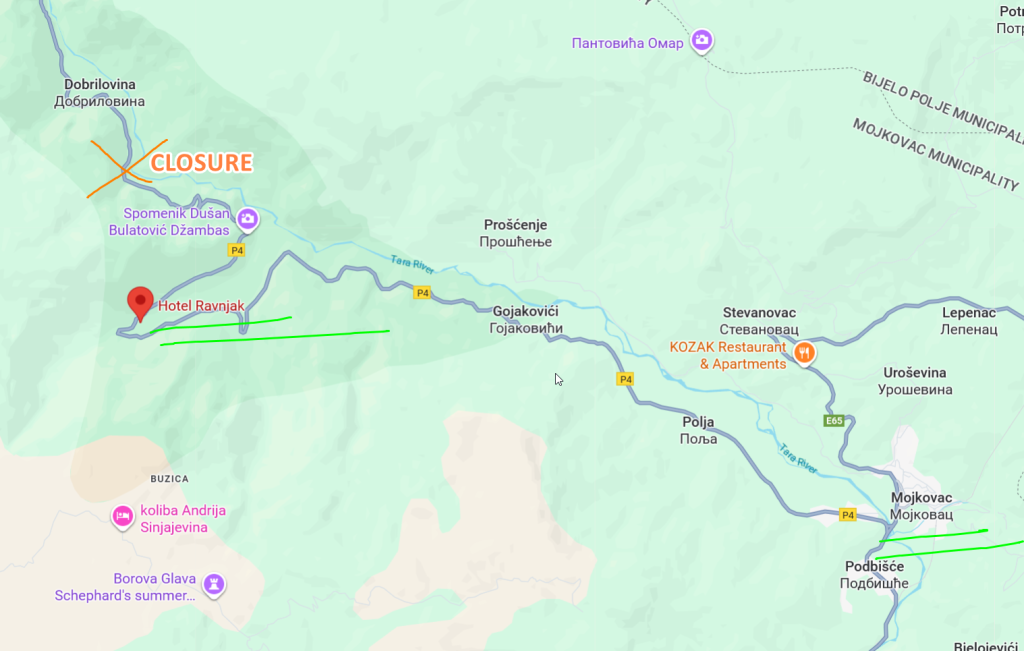
While looking for accommodation on your own, please note the road closure just behind Ravnjak (see the map). They promise to finish the road works during this winter, but so far we cannot be sure. So do not book anything to the north-west of Ravnjak—only to the east towards Mojkovac and beyond.
Food
We provide three meals a day, included in the course price. A vegetarian menu is also available. We are not able to provide vegan or some other special menus. Please contact us if you need a gluten-free diet; we might find a solution, but so far it is not guaranteed.
There will also be a cafeteria providing a choice of coffee, teas, and snacks.
Course Price
The flat price for the course is 350 euros.
The course price includes:
- the course infrastructure share cost
- food
- staying in your own tent on the course grounds
The course price is flat regardless if you arrive on May 26 or 27 and leave on May 31 or June 1—all meals are included.
The course price does not include:
- accommodation, other than in your own tent
- an offering to Rinpoche, which everyone will have a chance to give directly to him as dana (free donation). The recommended amount is 100–500 euros.
If you cannot afford the full price—for example, if you are traveling from afar and your flight tickets are expensive—you can choose the subsidized price of 300 euros.
If you have some financial surplus and would like to help those who cannot afford the full price, and to help us make the course better in other ways, we will be very grateful if you choose the surplus tariff of 400 euros.
Payment
During online registration, you are asked to pay only a 70-euro prepayment. The rest is payable in cash (euros only) upon arrival.
Additionally, if you choose accommodation in “our hotels” and get a bed assigned by us, you are asked to prepay a 30% deposit of your full stay price. The rest is payable in cash (euros only) upon arrival.
Refund policy:
- The course prepayment: If you decide not to come to the course for whatever reason, we will not be able to refund you because all these prepayment funds will go straight toward course infrastructure and other organizational expenses. If the course is cancelled, you will get your prepayment back.
- The hotel prepayment: If you decide not to come to the course for whatever reason, we will be able to refund your deposit only if we find another person to take your bed.
Registration
Registration for the course is opened.
Transport
The venue of the course is Hotel Ravnjak (pronounced “Ravnyak”), in the picturesque north of Montenegro.
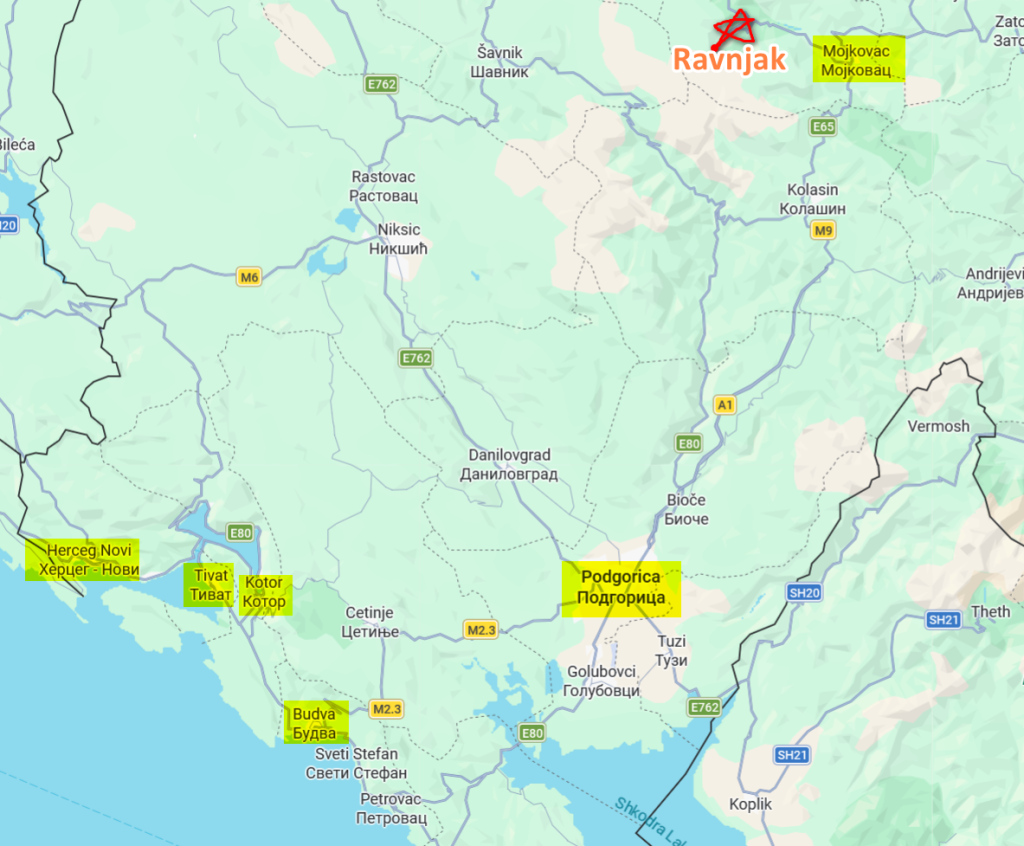
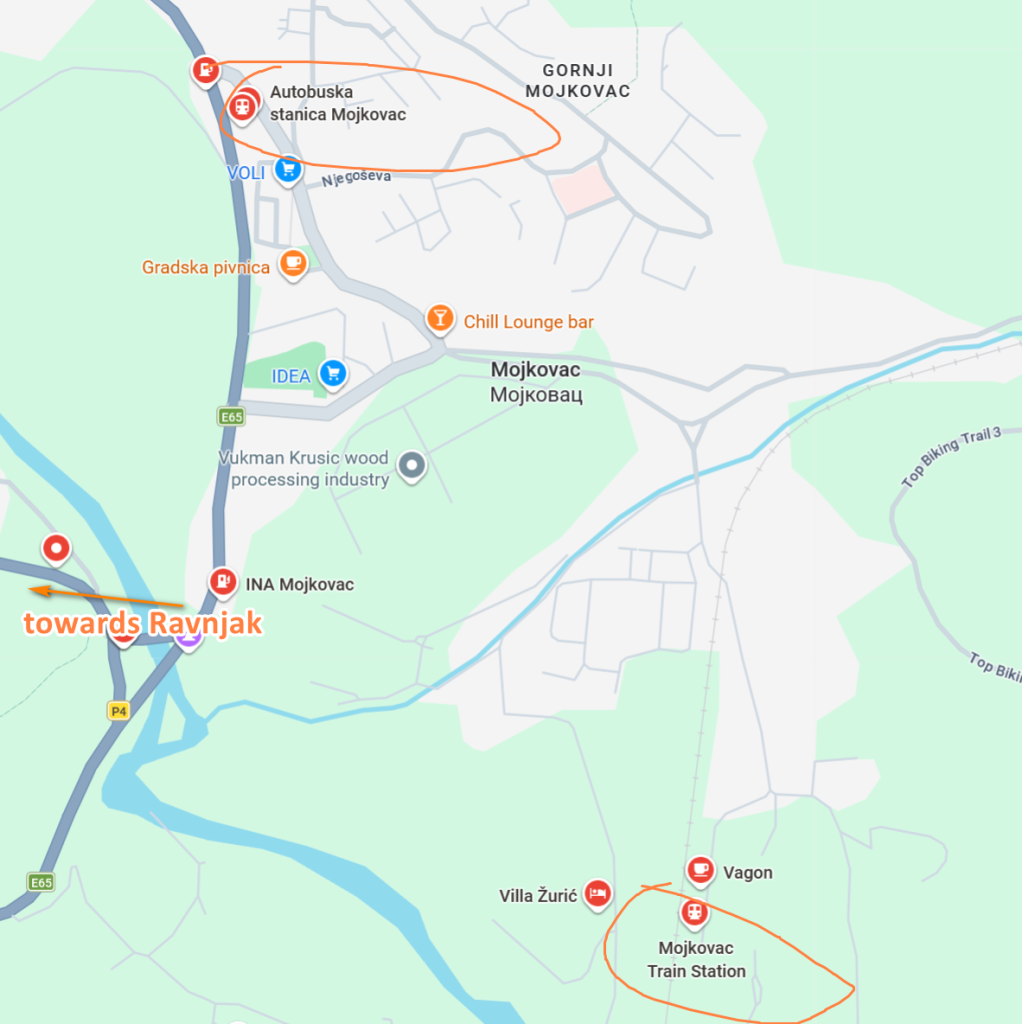
The closest town is Mojkovac (pronounced “Moy-koh-vats”), with both a bus station and railway station, about 25 minutes’ drive away.
From both the bus station and railway station in Mojkovac, we will organize free shuttles to the course venue and to “our hotels” throughout the day on May 26 and the morning of May 27. Alternatively, you can take a taxi.
The two airports in Montenegro are Podgorica and Tivat.
If you arrive at Podgorica: Take a local bus to the Podgorica bus station, and then a bus to Mojkovac.
Another way from Podgorica airport: Walk about 20 minutes to the train station, then take a train to Mojkovac. However, there seem to be only four trains a day on this route—check the schedule beforehand.
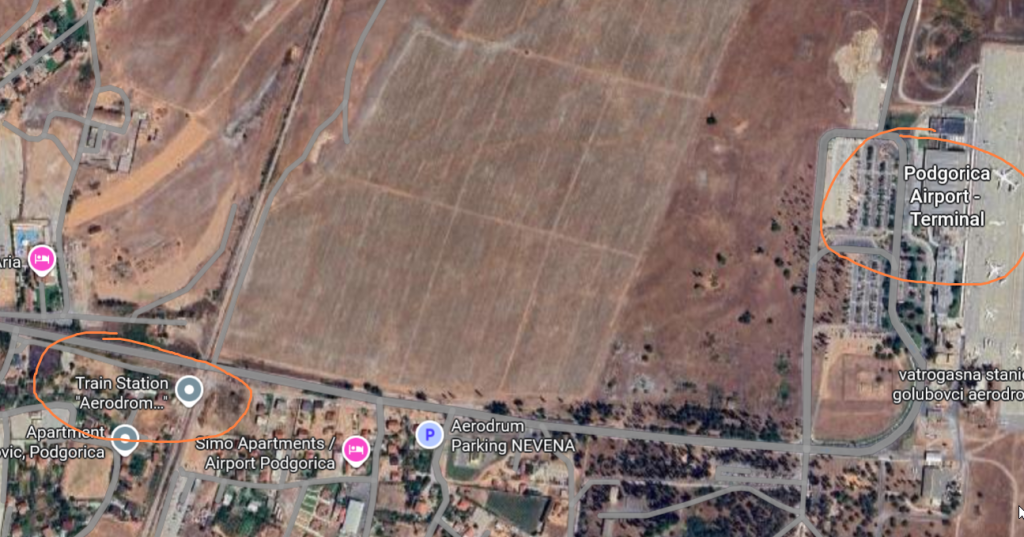
Taxi from Podgorica airport to the venue may cost like 80-100 euro.
We are considering organizing shuttles from Podgorica airport, but so far it is not guaranteed.
If you arrive at Tivat: Walk about 20 minutes to the bus station (unfortunately there is no public bus stop at the airport), then take a bus to Podgorica, and then a bus to Mojkovac. There is one bus a day going directly from Tivat to Mojkovac.
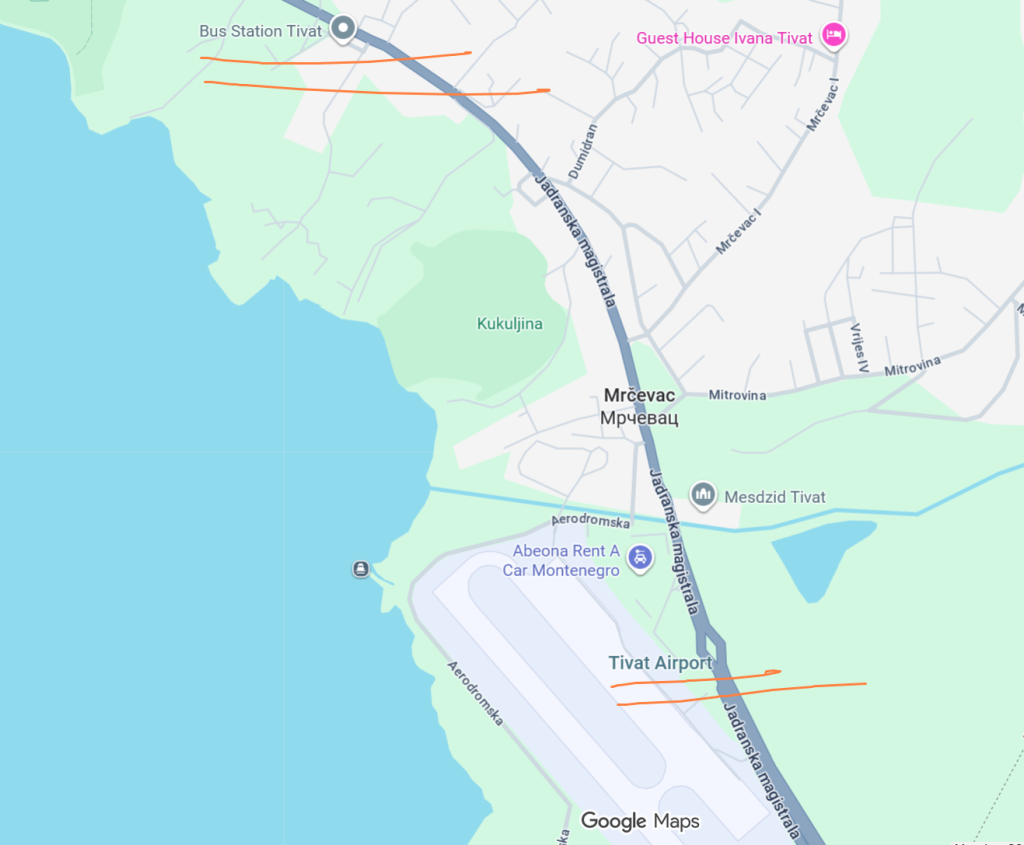
Taxi from Tivat airport to Tivat bus station may cost like 30 euro, to Podgorica bus station about 100 euro.
If you are going to take a taxi, it’s very advisable to book it beforehand. Please drop us a line to email phowa26@kagyu.me if you like to book a taxi or transfer.
Other airports in proximity:
- Tirana (major regional hub with many flights—check visa requirements for Albania)
- Dubrovnik (check visa requirements for Croatia)
- Belgrade (check visa requirements for Serbia)
- Pristina (check visa requirements for Kosovo) – mind that Kosovo stamp in your passport may cause extra questions from the Serbian border police shall you visit Serbia in the future
Belgrade, while quite far, might be an interesting option because almost every bus from Belgrade to Montenegro goes via Mojkovac. There is also a night train from Belgrade to Bar that arrives at Mojkovac train station early in the morning.
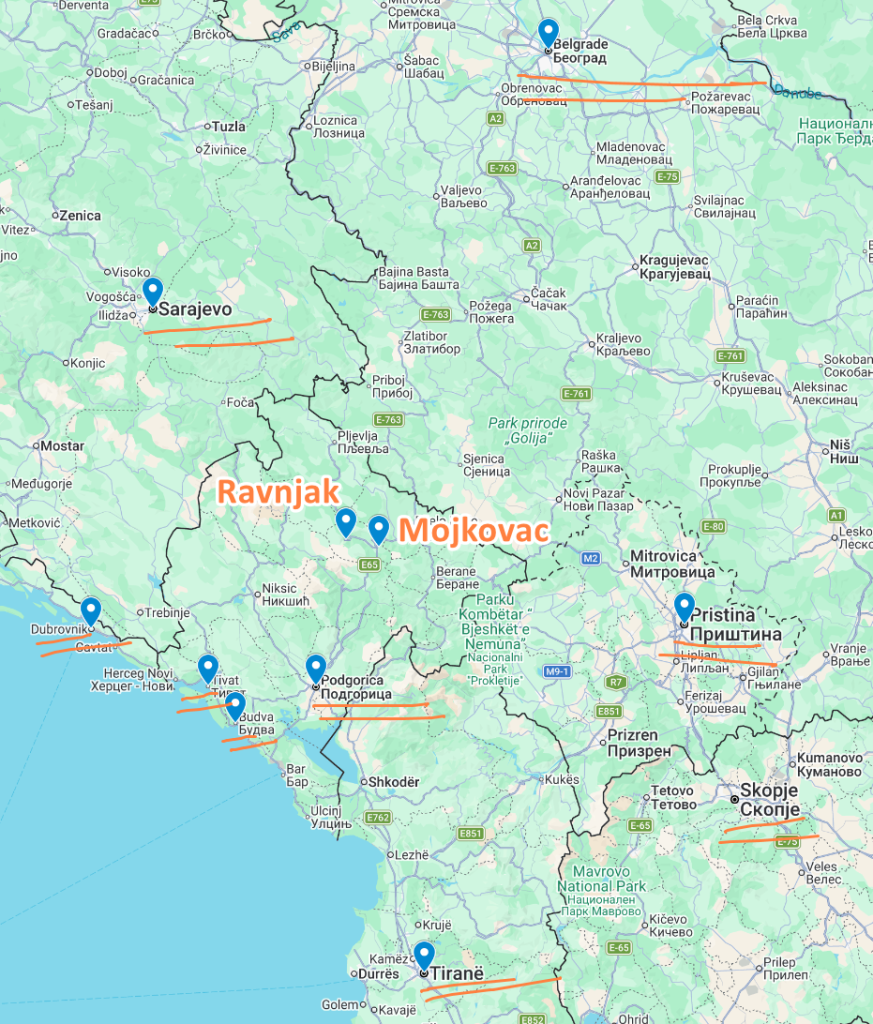
Rent a car: We honestly recommend this option—it would make reaching the venue so much easier, and there is so much to see in Montenegro before and after the course!
General advice on booking your flight:
Consider the travel time to the venue. If you arrive at Podgorica airport, you are safe to reach the course start if your flight arrives by 10 AM on May 27. For all other options, you would need to arrive on May 26.
The same applies to departure after the course: From Podgorica airport, you are safe not to miss the course end if your flight departs after 6 PM on May 31. For all other options, you had better book your return flight from June 1 onward.
Please check the bus or train schedule before booking your flight tickets!
Check the bus schedule in Montenegro and the Balkans: https://busticket4.me/EN
Check the train schedule in Montenegro and Serbia: https://zpcg.me/en/red-voznje/ukupno
Other Activities
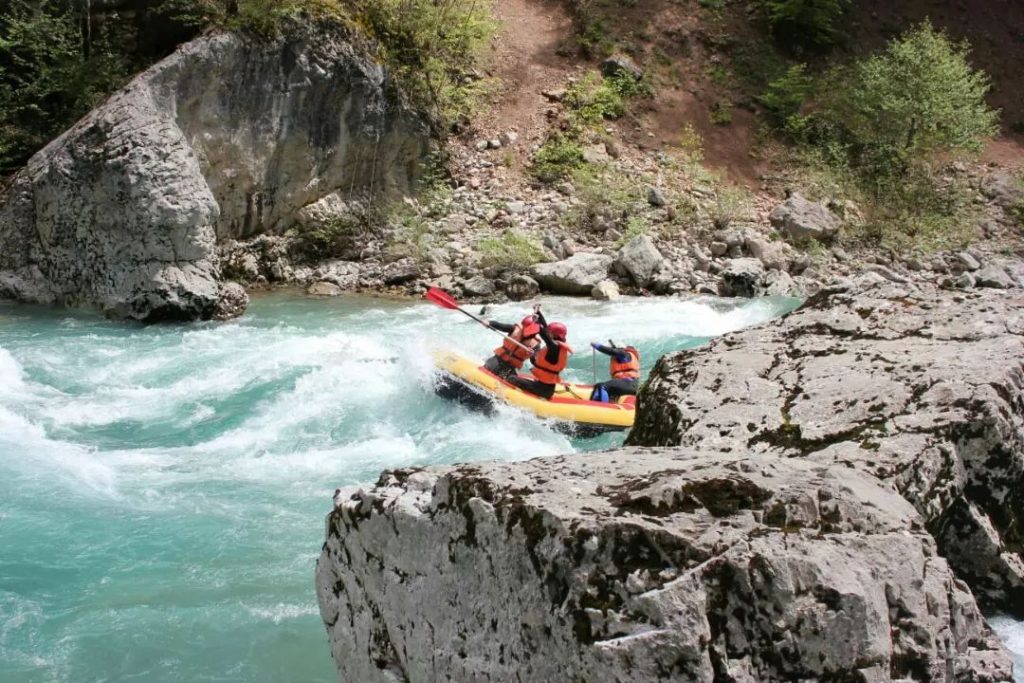
The venue is in the middle of incredible Montenegrin beauty. If you come a few days earlier or stay a few days later, you can explore the magnificent north, and our hosts will be happy to organize wilderness activities like rafting, quad bikes, enduro, canyoning, hiking, etc., for you.
You can also spend a few days at the amazing Adriatic Sea in the best season.
Visa Requirements
Montenegro is not part of the Schengen zone. Check your visa requirements here
What to Take with You
- Passport
- money
- meditation cushion and something soft to sit on
- health insurance
- your usual medications
- clothes for different types of weather (it’s the mountains—don’t forget warm layers)
- yoga mat if you want to practice yoga with Rinpoche in the morning
- FM radio if you need translation
Montenegro is not a part of European roaming zone (should be there some time in 2026 though), so our advice is either to check your mobile provider roaming tariff to Montenegro beforehand, or to buy a “tourist SIM” for about 15 euro upon arrival in airport. Please check before your trip for the updates regarding MN/EU roaming.
Children Policy
Children of all ages are not welcome at the course. First, they are not allowed in the gompa during sessions (with the exception of teenagers who participate in the course). Second, the course site is an unsafe area—there is a dangerous mountain river flowing through the site, so every child must be accompanied by an adult at all times. If you are parents thinking of taking shifts with your child, you will miss half of the sessions, which is not an option. And if you bring a babysitter, you would be better off finding another place for their daily activities with more entertainment for your child.
Pets Policy
No pets are allowed at Hotel Ravnjak, nor in the gompa (some friends might be allergic, and for general hygienic reasons). The only possible option is if you stay with your pet in your tent and keep it out of the gompa somehow.
Other Policies
Needless to say, drugs of all kinds are strictly prohibited at the course site.
The course will operate in non-alcohol mode; non-alcoholic beer and wine will probably be sold.
Volunteers
The venue and contractors provide most of the course infrastructure; however, the whole organization falls on our very small team, and we are also going to cook for ourselves to keep the course price as low as possible. Thus, we will be grateful if you take part in Karma Yoga by helping with different tasks, such as:
- Kitchen: cutting and other preparation, food distribution, cleaning
- Cleaning and garbage
- Cafeteria
- Dharma shop
- Parking and logistics
- Registration before the course (especially if you have such experience)
- Gompa: maintaining order, cleaning
All Karma Yoga shifts will be organized strictly between sessions, so you won’t miss any part of the course.
Please mention in your registration form if you would like to help in a particular team.
Building Up
Especially if you are a handyman and can arrive a few days before the course, we need to make some preparation works and to build a few constructions, so your help is much needed. Building up days are free for you. Please drop us a line to email phowa26@kagyu.me .
Important to Know: Tourist Registration
According to Montenegrin law, all foreign visitors (non-residents) staying in the country must register their stay and pay a tourist tax.
The tax is €0.70–€1.00 per person per day, depending on the municipality.
If you stay in a hotel or registered private accommodation, the provider is legally required to register you and collect the tax on your behalf.
However, if you stay with friends, in informal accommodation, or in your own tent/mobile home, it is your responsibility to ensure registration at the local Tourist Office (Turistička organizacija) in the municipality where you are staying.
If you change accommodation during your visit to Montenegro, you must register at each new location without missing a single day.
Failure to comply may result in consequences when leaving the country, such as a fine of up to €200, potential issues with future visits, or other complications at the border.